
.webp)
CCI Field Notes: Montreal
July 17, 2026
Hi CEOs,
Welcome back to Field Notes, CCI’s new summer newsletter. If you missed our first dispatch last week from Calgary, you can read it here. Each Friday of this hot Canadian summer, our team is sharing our favourite haunts and HQs across the country that you should know about if you're spending a few days in one of Canada's bustling innovation hubs.
This week, the sun is shining on Montréal, where CCI hosted a special cinq à sept with local business leaders for the launch of our pre-election dossier, What Québec's Innovators Need To Scale.
Québecers will head to the polls this fall and decide whether to give the CAQ another mandate under their new leader, or embrace a new political direction offered by the competing parties. At a time when governments everywhere are thinking differently about productivity, artificial intelligence, economic sovereignty, and how to build more resilient economies, Montreal sits at the centre of many of those conversations.
In this weeks dispatch, our Quebec lieutenant Jean-François Harvey shares CCI's policy blueprint for Quebec's next government, plus we highlight Montréal healthtech leader AlayaCare, introduce GIRO President and CEO Renée Touzin, and recap our recent Innovator Exchange on the future of health care procurement. We've also put together our list of our favourite places to eat, meet and stay when in La Métropole.
Happy reading,
Patrick
Patrick Searle is the Chief Executive Officer of the Council of Canadian Innovators, a national member-based organization reshaping how governments across Canada think about innovation policy, and supporting homegrown scale-ups to drive prosperity. If you are interested in learning more about the Council or joining our cause, get in touch.
ON THE GROUND

Yesterday, CCI released What Québec's Innovators Need to Scale, our policy blueprint outlining the priorities we believe the next provincial government should adopt to strengthen Québec's innovation economy.
The timing matters. Québec enters this election with remarkable strengths: globally recognized expertise in artificial intelligence, world-class research institutions, and a growing community of technology companies building products that compete around the world. The challenge is ensuring those advantages translate into more companies that scale, remain headquartered here, and create long-term economic value for the province.
Our recommendations focus on the barriers Québec's innovators tell us they face every day: attracting and retaining specialized talent, unlocking more private capital, modernizing public procurement so innovative companies can compete, and building the policy frameworks needed for digital sovereignty, AI commercialization, and intellectual property retention.
As political parties develop their platforms, they should prioritize policies that:
1. Strengthen Quebec's Talent Advantage
- Create a dedicated fast-track immigration stream for workers hired by Quebec-based scale-ups.
- Expand tuition exemptions and strengthen pathways to permanent residency for international STEM graduates.
- Modernize language policy by reducing compliance burdens on growing companies while continuing to support French language integration.
2. Unlock Capital for High-Growth Companies
- Introduce a Quebec Innovation Venture Capital Tax Credit to mobilize private investment.
- Accelerate approval timelines for innovation tax credits and reduce administrative burden.
- Support strategic sectors through targeted incentives that encourage domestic commercialization and production.
3. Use Government Procurement to Build Quebec Companies
- Replace lowest-cost procurement with a total-value approach that recognizes innovation, economic impact, and local content.
- Create a dedicated innovation procurement office and simplify access for scaling companies.
- Modernize procurement and compliance requirements so emerging technology companies can compete for government business.
4. Build Marketplace Frameworks for the Modern Economy
- Strengthen intellectual property retention by making commercialization incentives work for scaling companies.
- Develop a provincial digital sovereignty strategy that supports Quebec-controlled infrastructure and protects sensitive data.
- Accelerate AI commercialization by aligning tax incentives, expanding compute capacity, and supporting adoption by growth-stage firms.
The opportunity before Québec is significant. The province has already invested in building one of the world’s strongest innovation ecosystems. The next step is ensuring those investments produce more globally competitive companies that grow, hire, and commercialize their technologies here at home. This is the work before CCI and Québec’s next government: turning innovation potential into lasting economic strength, high-value jobs, and prosperity owned and anchored in the province.
Jean-François Harvey is the Director of Québec Affairs for the Council of Canadian Innovators. He can be reached at jfharvey@canadianinnovators.org and on LinkedIn.
BUILT HERE
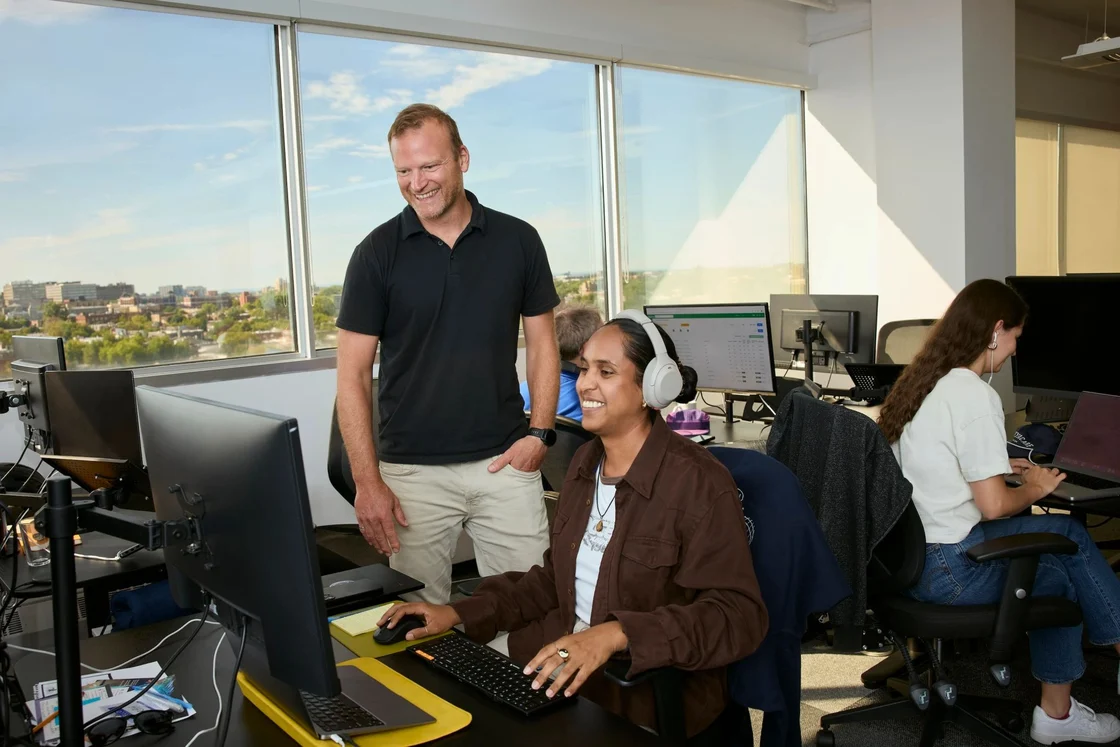
AlayaCare
As Canada’s population ages and care moves from healthcare institutions into communities, digital platforms are now central to delivering safe, coordinated home care. Montréal-based AlayaCare is helping build that future.
Founded in 2014 and led by CEO Adrian Schauer, the company develops software that helps home care providers coordinate care, manage scheduling, improve communication, and reduce administrative burdens for frontline staff. Its platform is used by care organizations across Canada and internationally, giving providers the tools they need to deliver more connected, efficient care.
Earlier this year, the Government of Nova Scotia selected AlayaCare to deliver a new province-wide home care platform as part of a five year, $19 million modernization initiative. Once fully implemented, the system will connect 15 home care agencies with Nova Scotia Health, supporting approximately 40,000 clients while improving coordination, planning, and the experience of patients, families, and caregivers.
It's another example of a Montréal company solving complex public sector challenges with technology built in Canada. As provinces continue to modernize their health systems, AlayaCare demonstrates how homegrown innovators are helping improve essential public services while building globally competitive businesses.
Read our By Canadian Innovators profile on AlayaCare, and explore more Québec companies in the CCI Directory.
ONE TO WATCH
.webp)
Montréal has a long history of producing technology companies that solve complex problems for customers around the world. Behind many of those companies are leaders who have spent years building expertise, growing teams, and expanding Canadian businesses internationally. Renée Touzin is one of them.
20 years ago after completing her master's degree in computer science and operations research at the Université de Montréal, Renée joined GIRO, a Montréal-based software company that helps public-transit agencies and postal operators plan and run complex transportation networks. Since then, she has held roles across the company, from business analyst and project manager to executive leadership before becoming President and Chief Executive Officer. She has also led major projects across Europe and South America, helping expand GIRO's international footprint while the company has remained headquartered in Montréal.
Learn more about Renée and other Quebec innovators on CCI's CEO Directory.
SEEN & HEARD
.webp)
Earlier this spring, CCI brought innovators, policymakers, and health care leaders together in Montréal for an Innovator Exchange exploring one of Canada's biggest opportunities: how public procurement and better data can help scale Canadian health technology while improving care delivery.
Hosted in partnership with Dentons, the discussion drew on the ideas outlined in Care at Scale: Public Buying, Data and Better Health Care for Canadians. While the conversation covered different parts of the health system, participants returned to several common themes.
Leaders spoke about the need to move beyond lowest-cost procurement and adopt approaches that recognize the long-term value Canadian technology can create for patients and the health care system. They also highlighted the challenges innovators face when successful pilot projects never translate into meaningful procurement opportunities, and the importance of improving interoperability so proven technologies can scale across jurisdictions rather than remaining isolated in individual organizations.
The discussion reinforced a message CCI continues to hear across the country: Canada already has companies building technologies that can strengthen health care. The next challenge is creating procurement pathways and policy frameworks that allow those solutions to be adopted at scale.
Read the full event recap here.
THE CCI DIRECTORY

A short guide for your next trip to Montréal, whether you're in town for a board meeting, investor conversation, policy roundtable, or simply catching up with Québec's innovation community.
Where to Take an Investor Coffee
A few years ago, we would have recommended Crew Collective & Café, housed in the former Royal Bank building, as the perfect place to open your laptop and settle in for the day. With its soaring ceilings and neoclassical architecture, it remains a striking setting—but recent changes have restricted laptop use in favour of café culture and in-person networking. These days, it is better suited to a face-to-face conversation than a Slack one, which is good news for those wanting to meet an investor, but finding a seat can be difficult.
The panoramic views of Montreal provided by Sora, on the 45th floor of Place Ville Marie 1, are a great way to view Habitat 67 and Mont Royal in the same visit. Le Cathcart, the subterranean restaurant hub below the PVM complex, offers sunny rays from their glass dome all year round. In the old port, you can't beat a cortado from Cafe Olympico (be sure to also treat yourself to a bombino!).
Where to Host a Board Dinner
Monarque is a reliable choice for client dinners and executive meetings, while Hiatus (pictured above), a floor up from Sora, offering sweeping views of Montreal from the 46th floor of PVM. For something a little more relaxed with your core team, Vin Mon Lapin rarely disappoints, and we like Restaurant Limbo, a new bistro in the heart of Little Italy offering up small plates and a great vibe.
Where to Work Between Meetings
Grande Bibliothèque (BAnQ)
Bright, quiet, and located near the Berri-UQAM metro station, the Grande Bibliothèque is an ideal place to escape the pace of downtown for an hour or two. Whether you're preparing for a board meeting or clearing your inbox before the next one, it's one of Montréal's best public workspaces.
Where to Gather After the Event
For a fun and adventurous wine list, vinvinvin and Pichai should be on your list. Old Montréal is hard to beat for an evening conversation after a full day of meetings. For apertivos, Bar Bello on Saint-Laurent, and for cocktails, the Atwater Cocktail Club down near the Lachine Canal are great options.
Where to Stay
Hôtel William Gray — the site of the Canada's CEO Summit 2024 — is a beautiful gem in the old port of Montreal. The Fairmont Queen Elizabeth across from Place Ville Marie offers great downtown access for meetings and a quick connection to the train station.
Next week, we head to St. John's. Have a great weekend!
JOIN CCI'S NEWSLETTER