
.png)
CCI Field Notes: Vancouver
August 7, 2026
Hi CEOs,
When I met a reporter for coffee at 6:45 a.m. in Vancouver earlier this year, I was impressed to see the café already buzzing. Laptops were open, meetings were underway, and nobody seemed to give the hour a second thought. After all, it's 9:45 a.m. somewhere.
Although it was still dark outside, the business day was already well underway. Questions I'd sent the night before had been answered by our federal director in Ottawa, planning decisions had already been made by our events team in Toronto, and our Atlantic lead in St. John's was well into a day of meetings with CEOs across the region. By the time I sat down with my coffee, I had the distinct sense I'd arrived late to the day.
The more time I spend in Vancouver, the more I find myself thinking about the city's relationship with time. People here seem to have found a way to stretch the day to live in several time zones at once. The morning belongs to customers in Toronto, New York and London. The afternoon shifts toward Seattle and Silicon Valley. And with Asia just across the Pacific, an early evening call is a welcome start to the day for a customer in Sydney, Shanghai or Tokyo. Geography has given Vancouver an unusual vantage point, and the city's businesses have learned to make the most of it.
B.C.'s unique relationship with time shows up elsewhere too. Sean Silcoff at The Globe and Mail has written extensively about British Columbia's remarkable concentration of life sciences companies (including this week), but the province's mining, fintech, clean technology, advanced manufacturing and life sciences companies all share something fundamental: they take time to build. These aren't businesses where an idea on Monday becomes a product by Friday. They require years of research, engineering, product development, regulatory approvals and patient capital before they ever reach commercialization. We celebrate overnight successes because they're easier to tell stories about, but many of B.C.'s most consequential companies are really fifteen-year overnight successes.
It's why CCI has long championed innovation flow-through shares for our most R&D intensive industries. If we know that some of Canada's most important sectors are built around long development timelines and significant upfront investment, then our capital markets should be designed to recognize that reality. We have long accepted that principle in resource exploration. It's time we applied the same thinking to the companies building Canada's future in deep technology, life sciences and clean technology.
Perhaps it's no coincidence that Lululemon, one of Canada's great global success stories, emerged from Vancouver carrying a philosophy of finding comfort while trying to be more patient and focused. Those ideas may be just as useful in building enduring companies as they are in everyday life.
It's one of the reasons we're excited to bring Canada's CEO Summit to Vancouver in just under two months. Every city leaves its imprint on the conversations we have, and Vancouver has always encouraged me to think differently about time: how geography shapes a workday, how global markets shape opportunity, and how some of Canada's most important companies require a longer horizon than our markets and public policy have often been willing to provide. There are few better places to gather founders and CEOs who understand that building enduring companies takes time.
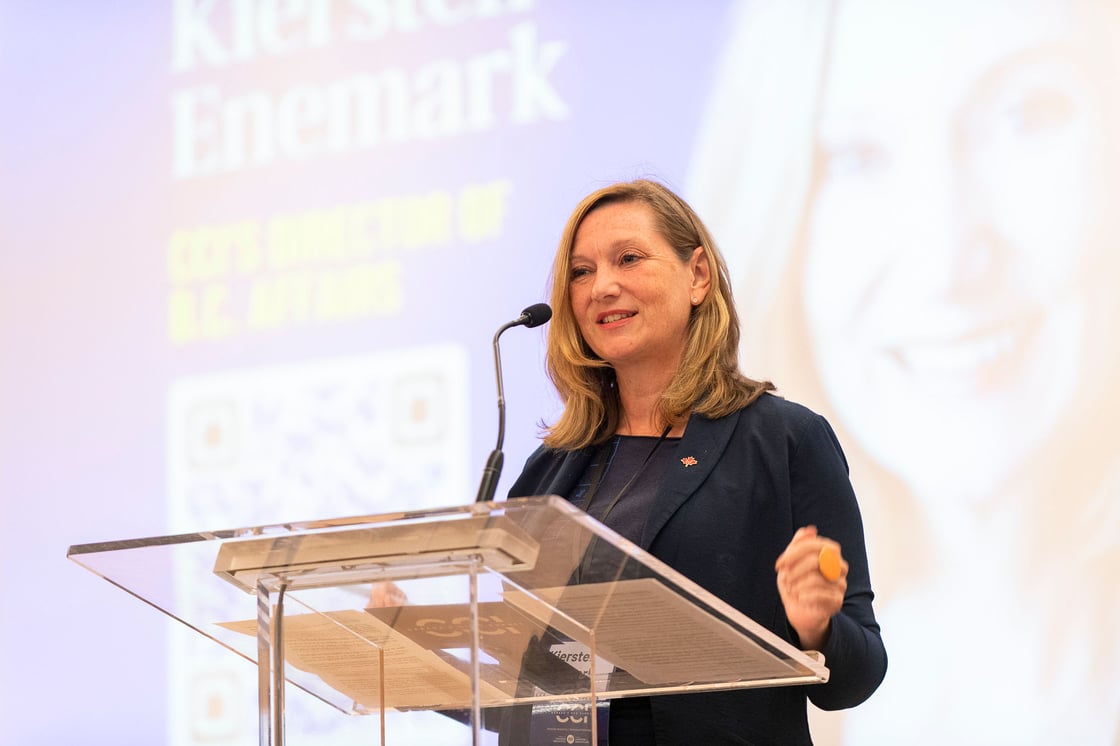
Before we gather there this fall, though, I thought we'd spend a little time exploring the ecosystem itself. For this week's edition of Field Notes, I asked our own Kiersten Enemark, CCI's boots on the ground in British Columbia, to help introduce a few of the founders, companies and places that make Vancouver one of Canada's most distinctive innovation hubs.
Happy reading,
Patrick
Patrick Searle is the Chief Executive Officer of the Council of Canadian Innovators, a national member-based organization reshaping how governments across Canada think about innovation policy, and supporting homegrown scale-ups to drive prosperity. If you are interested in learning more about the Council or joining our cause, get in touch.
ON THE GROUND
Vancouver sells itself on ocean views and mountain air — a city where the workday ends with a hike along the Baden Powell Trail or a paddle across False Creek, and where condo towers share the skyline with the North Shore rainforests. It’s the kind of place people move to for the lifestyle first and figure out the career second. But behind the seawall full of joggers, Vancouver has built one of the densest concentrations of tech talent in North America, with more than half its tech workers employed by tech companies themselves — rather than non-tech industries — placing the city among the most concentrated talent hubs on the continent, just behind the Bay Area and Seattle.
That concentration of talent is one of British Columbia's greatest competitive advantages. The challenge now is making sure the companies attracting that talent choose to stay, scale and build their next chapter here. That's the thinking behind CCI's 2027 B.C. Budget recommendations.
It starts with talent itself. Vancouver's technology talent pool continues to grow, particularly around False Creek Flats, but keeping that talent in British Columbia means staying competitive with other provinces and global innovation hubs. One unnecessary hurdle is the province's approach to regulating software engineers, which currently subjects many to licensing requirements, fees and compliance rules designed for structural and civil engineering. CCI has been advocating for a software engineering title carve-out, modelled on Alberta's approach, so that professional regulation better reflects how modern technology companies define and organize engineering work.
The same long-term thinking applies to British Columbia's world-class life sciences sector. Vancouver has become Canada's leading city for life sciences scale-ups, supported by companies such as STEMCELL Technologies and AbCellera that have demonstrated what's possible when intellectual property is developed and commercialized at home. That's why we've proposed an Innovation Box — a targeted tax incentive designed to keep IP-intensive companies anchored in British Columbia rather than seeing their ideas and headquarters migrate elsewhere.
It also extends to the industries that built this province long before software arrived. Look beyond the condo towers to Vancouver's port and you'll find container ships carrying wood products, manufactured goods and critical minerals through Canada's busiest gateway to the Pacific. The opportunity is to connect that resource economy with the technology being built just a few kilometres away. A Resource-Sector Technology Adoption Tax Credit would help traditional industries adopt made-in-B.C. technologies instead of importing solutions from elsewhere.
While the mountains draw talent here, what’s less certain is whether the companies that start up will choose to stay and scale in B.C., or get pulled elsewhere by friendlier rules. Budget 2027 is designed to tip that choice in Vancouver's favour — cutting the red tape that pushes engineers out, keeping life sciences IP anchored here instead of sold off, and giving B.C.'s resource industries a reason to adopt the technology being built in their own backyard. Do that, and B.C.'s homegrown innovation sector doesn't just hold steady. It keeps growing.
Kiersten Enemark is the Director of B.C. Affairs at the Council of Canadian Innovators. She can be reached at kenemark@canadianinnovators.org or via LinkedIn.
BUILT HERE

Jane App
Ali Taylor founded Jane App after struggling to find software that truly met the needs of her own multidisciplinary health practice. Working alongside co-founder Trevor Johnston, she built a platform that helps health-care professionals manage online booking, charting, billing, payments and patient intake, giving practitioners more time to focus on patient care.
That relentless focus on customer needs has made Jane one of Canada's standout software success stories. The North Vancouver company was recently named by The Globe and Mail as one of just 77 privately held Canadian technology companies generating more than US$100 million in annual revenue, with Ali joining fellow technology leaders to discuss the opportunities and challenges of scaling in Canada.
From a single clinic to tens of thousands of practitioners around the world, Jane's growth is a reminder that some of Canada's most successful companies are built by solving one problem exceptionally well, listening closely to customers, and scaling without losing sight of the people they set out to serve.
Learn more about Jane App and explore other British Columbia based companies in the CCI Directory.
ONE TO WATCH

Daniel Eberhard, Founder and Chief Executive Officer of KOHO
Daniel Eberhard has built a career tackling industries that most entrepreneurs consider too complex, too regulated or too entrenched to disrupt. After co-founding Kineticor Renewables in 2010 and developing more than $50 million in wind energy projects before its acquisition by Algonquin Power, he turned his attention to another foundational industry: financial services.
In 2014, Eberhard founded KOHO with the belief that Canadians deserved a simpler, fairer and more transparent way to manage their money. Since then, the Vancouver-based company has raised more than $400 million to build one of Canada's leading financial technology platforms, helping millions of Canadians spend, save, build credit and manage their finances through a single app.
Now Eberhard is aiming even higher. KOHO is seeking a Schedule I bank licence, a move that would allow it to accept deposits directly and expand the financial products it offers. Backed by a $130 million financing announced in June, the company is positioning itself to compete more directly with Canada's incumbent banks and bring greater competition to one of the country's most concentrated sectors.
Learn more about Daniel and other Vancouver based innovators on CCI's CEO Directory.
SEEN & HEARD

British Columbia has become one of CCI's busiest regions, and we've made a point of showing up regularly — not just for conferences, but for the conversations in between.
Over the past year, we've hosted CEO mixers during TechExit and Web Summit Vancouver in partnership with National Bank, welcomed Minister Brenda Bailey for a discussion on British Columbia's 2026 Budget, and brought together founders and policy leaders with PacificCan, Acetech and PwC to explore the policies shaping the province's innovation economy. This October, we'll return to Vancouver once again as 200 founders, CEOs and ecosystem leaders gather for Canada's CEO Summit at the Rosewood Hotel Georgia.
Strong innovation ecosystems aren't built through one event or one organization. They're built through relationships, regular conversations and a willingness to keep bringing ambitious people into the same room. That's work we're proud to continue across British Columbia.
To learn more about our advocacy in B.C., visit the updates page on our website.
THE CCI DIRECTORY

Keep these places in mind the next time business brings you to Vancouver, whether you're meeting a founder in Burnaby, hosting a board dinner downtown or finding an hour between meetings.
Where to Take an Investor for Coffee
Downtown, FUNK Coffee Bar is a reliable spot for an early meeting, while Mink Chocolates Café pairs excellent coffee with pastries just a short walk from the financial district. If your schedule takes you east toward Burnaby's growing technology corridor, Prado Café at Still Creek sits within walking distance of Novarc Technologies and several other innovative manufacturers. Further north, Kory's Coffee in Burnaby Heights offers a neighbourhood feel and is worth the short detour.
Where to Host a Board Dinner
Nightingale remains one of downtown Vancouver's best choices for a group dinner, with a menu built around sharing and a room that always feels lively. For something quieter, L'Abattoir in Gastown offers private dining in one of the city's most enduring restaurant spaces.
Where to Work Between Meetings
Rather than opening your laptop in another hotel lobby, grab a Mobi by Rogers bike and ride the Seawall. It's one of the quickest ways to understand why so many people choose to build their careers here. If you need to stop, Cactus Club Café English Bay makes an easy place for lunch or a coffee overlooking the water.
Where to Gather After the Event
The Lobby Lounge at the Fairmont Pacific Rim has long been one of Vancouver's dependable meeting places after an event, with live music most evenings and enough space to keep conversations going. If the weather cooperates, head upstairs instead. Parker Rooftop offers sweeping views across downtown, while Reflections: The Garden Terrace at the Rosewood Hotel Georgia is one of the city's classic rooftop patios. Kiersten's personal favourite remains The Sandbar on Granville Island, where the rooftop looks back across False Creek toward the city skyline.
Where to Stay
Rosewood Hotel Georgia will play host to Canada's CEO Summit this fall and remains one of Vancouver's landmark hotels, combining old-world character with a location in the heart of downtown. A few blocks away, Fairmont Pacific Rim places visitors beside the waterfront, the Vancouver Convention Centre and Coal Harbour. For those looking to stay closer to Stanley Park, The Westin Bayshore offers another excellent waterfront base with easy access to both the park and the downtown core.
Next week, we head to our nation's capital! Have a great weekend!
JOIN CCI'S NEWSLETTER